Mercury FourStroke Outboards (2.5–20 HP)
All current 2.5–20 HP Mercury outboards are four-stroke. This means no mixing oil with gas—just use regular unleaded gasoline, and change the engine oil periodically. These FourStroke engines run cleaner, quieter, and more efficiently than the old two-strokes.
Mercury tiller models come in:
- 15″ (Short shaft)
- 20″ (Long shaft)
- 25″ (Extra-long shaft) – for select models (e.g., sailboats)
To determine what you need:
Measure your transom height (from the top where the motor mounts down to the hull bottom), and match it to these guidelines:
- 15–17″: Short Shaft
- 18–22″: Long Shaft
- 23″+: Extra-Long Shaft
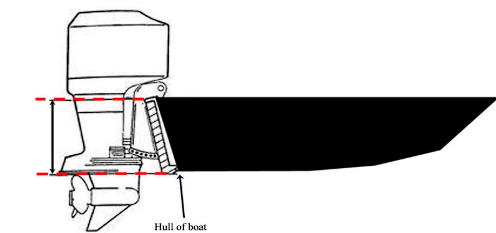
Mercury’s letter designations in model names describe how the engine is configured. Here's a breakdown of the codes:
| Code | Meaning |
|---|---|
M |
Manual start (pull-start) |
E |
Electric start (requires battery) |
A |
Alternator |
L |
Long shaft (20″ shaft) |
XL |
Extra-long shaft (25″ shaft) |
H |
Tiller handle |
RC |
Remote control (no tiller handle) |
PT |
Power Tilt (electric tilt up/down) |
Examples
-
15MLH= Manual Start, Long Shaft, Tiller -
9.9ELHPT= Electric Start, Long Shaft, Tiller, Power Tilt -
7.5ESH= Electric Start, Short Shaft, Tiller -
7.5ELRC= Electric Start, Long Shaft, Remote Control
-
FourStroke
Mercury’s general-purpose outboard line—great for fishing, utility, and recreational use. Reliable, efficient, and available from 2.5 to 20 HP. -
Avator (Electric)
Mercury’s electric motor lineup—quiet, zero-emission, low-maintenance. Great for eco-sensitive waters or electric-only zones. -
ProKicker
Heavy-duty small outboards with precision trolling, reinforced gearcases, and power tilt. Ideal as auxiliary motors for fishing boats. -
SeaPro
Commercial-grade engines built for durability and high-hour operation. Reinforced internals for tough environments like rentals and guide boats. -
Command Thrust
Enhanced low-speed thrust for heavier boats. Larger gearcase and prop provide better control under load.
EFI stands for Electronic Fuel Injection. Here’s the breakdown:
| Feature | EFI | Non-EFI (Carbureted) |
|---|---|---|
| Fuel Delivery | Precise electronic control | Mechanical carburetor |
| Starting | Faster & more reliable, especially cold | May require more pulls or choke |
| Fuel Efficiency | Higher – better combustion | Lower |
| Maintenance | Lower – no carb cleaning | May need periodic carb tuning |
| Performance | Smoother throttle response | Less refined at low speeds |
Mercury 9.9, 15, and 20 HP FourStroke Models
now feature EFI, delivering modern convenience and reliability with no priming or choking required.
Avator 7.5e Electric Outboard
The Avator 7.5e electric outboard delivers performance comparable to a 3.5 HP gas engine, but with significantly higher torque at low speeds. This increased torque results in stronger acceleration and better load-pushing ability than a traditional 3.5 HP gas outboard.
-
Peak Power Output:
750 watts at the prop shaft - Thrust: Comparable to Mercury’s 3.5 FourStroke
- Efficiency: Designed for short-range, low-speed travel—perfect for tenders, dinghies, and small boats
Runtime and charging are based on the Avator 7.5e’s 1 kWh lithium-ion battery:
| Usage Type | Approximate Runtime |
|---|---|
| Full throttle | 45 minutes |
| Half throttle / cruising | 75–90 minutes or more |
Charging Time:
-
Standard Charger (110V/120V AC): ~
10 hoursfrom 0 to full -
Optional Fast Charger: ~.
4 hours
Mercury Marine backs its outboards with industry-leading warranties that vary depending on how the engine is used and which model series it belongs to. Here's a breakdown:
🔧 Standard Recreational Warranty – 3 Years
All new Mercury FourStroke outboards up to 20 HP used for recreational purposes come with a 3-year limited factory warranty.
Covers:
- Parts and labor for defects in materials and workmanship
- Major components like powerhead, lower unit, and electrical systems
- Non-commercial, personal use only
Excludes:
- Damage from neglect, accidents, or misuse
- Routine wear-and-tear parts (spark plugs, filters, etc.)
Note: Mercury’s warranty is transferable, which helps retain resale value if the engine is sold while still under coverage.
⚙️ Commercial Warranty – 1 Year
If the engine is used for commercial purposes (e.g., rentals, guiding, marina use), the warranty is reduced to 1 year for standard models.
This includes:
- Any outboard used in a business setting, even part-time
- Models that are otherwise identical to recreational ones but operated for profit
Recommendation: Commercial users are encouraged to consider Mercury’s SeaPro series for extended durability and longer commercial coverage.
💪 SeaPro Warranty – 2 Years Commercial Use
Mercury SeaPro outboards—built specifically for commercial operations—include a 2-year commercial warranty, which is double the coverage of standard models under commercial use.
Highlights:
- Designed for high-hour, rugged use
- Heavier-duty internals and cooling systems
- Backed by 2 full years of parts and labor protection, even when used daily in commercial service
SeaPro engines combine commercial-grade reliability with longer coverage, making them ideal for guides, fleets, and workboats.
Optional Coverage: Mercury Product Protection (MPP)
You can purchase additional coverage beyond the factory warranty through Mercury Product Protection plans, which extend protection up to 8 years total (recreational use only). This helps avoid out-of-pocket repair costs after the standard warranty ends.
Warranty Tip:
Keep all service records, use authorized Mercury dealers for repairs, and register your outboard promptly after purchase to ensure full coverage applies.
Whether you're storing your outboard for the off-season or simply not using it for several weeks, proper winterization ensures your engine stays reliable and protected. Follow these guidelines for both carbureted and EFI models.
✅ General Storage Checklist (All Models)
-
Flush the Engine:
- Use fresh water and flush muffs or a flush port to remove salt, sand, and debris.
- Run the engine for 5–10 minutes with the cooling water flowing.
-
Drain Water from the Cooling System:
- After flushing, tilt the motor fully down and let it drain completely to avoid freeze damage.
-
Change Engine Oil and Gear Lube (If applicable):
- For 4-stroke models, change engine oil and oil filter.
- Drain and replace lower unit gear oil—look for signs of water intrusion (milky oil).
-
Grease Fittings and Moving Parts:
- Apply marine grease to tilt pivots, steering joints, and prop shaft.
- Remove the prop and check for fishing line or debris.
-
Disconnect and Charge the Battery:
- Remove the battery (EFI models or electric start units).
- Charge fully and store in a dry, warm place.
🛢️ Fuel System: Critical Steps (Carbureted vs. EFI)
For Carbureted Models (e.g., 2.5–6 HP, some 8–9.9 HP)
-
Drain or Run Dry:
- Either drain the carburetor bowl or run the engine until it stalls to empty the carb of fuel.
- Use the built-in drain screw or allow the engine to idle until it quits.
-
Add Fuel Stabilizer: Run the engine briefly after adding stabilizer to circulate it through the system.
- If any fuel remains in the tank or fuel lines, add fuel stabilizer to prevent varnish and gum.
- Run the engine briefly after adding stabilizer to circulate it through the system.
For EFI Models (most 9.9, 15, 20 HP FourStroke)
-
Do NOT run dry or drain fuel lines:
- EFI systems rely on pressurized fuel and should not be run dry.
-
Add Fuel Stabilizer:
- Fill the tank with fresh, stabilized fuel.
- Run the engine for 10–15 minutes to ensure the stabilizer is fully circulated through the injectors.
-
Optional: Fogging Oil via Fuel Injector Cleaner Adapter:
- If desired, a Mercury dealer can fog EFI engines using a fuel system adapter tool and fogging solution.
- Never spray fogging oil directly into an EFI air intake.
🌫️ Fogging the Engine (All Gas Models)
- For manual fogging on carbureted engines: Spray fogging oil into the air intake while the engine is running at idle until it stalls or smokes heavily.
- For EFI models: Use a specialized fuel fogging solution through the fuel system—available through Mercury dealers.
🧼 Final Steps
- Wipe down the exterior with a mild cleaner and apply a corrosion inhibitor spray to the powerhead and metal surfaces.
- Store the engine upright (not on its side) in a dry, ventilated space.
- Cover the motor with a breathable outboard cover, not plastic, to prevent condensation buildup.
📝 Tip:
Run the engine at least once every 30–60 days if not winterizing for the full season. Use stabilized fuel year-round to protect against ethanol damage.
When selecting a Mercury outboard as a kicker (auxiliary) motor for trolling or backup propulsion on a larger boat, shaft length becomes especially critical—not only for proper water pickup and performance, but also to avoid drag when the motor is not in use.
🔍 Step-by-Step: Measuring for a Kicker Outboard
- Locate the Mounting Position: Determine where on the transom or motor bracket the kicker will be mounted—usually offset to one side of the main engine.
- Measure the Mounting Height: Use a tape measure to find the vertical distance from the top of the mounting surface (where the kicker will clamp or bolt on) straight down to the bottom of the hull at that point. This is your effective transom height.
-
Choose the Shaft Length: Match the shaft length of the kicker motor as closely as possible to this transom height:
- Short Shaft (15″): For transoms around 15"
- Long Shaft (20″): For transoms around 20"
- Extra-Long Shaft (25″): For deeper or elevated kicker brackets
⚠️ Important: Consider Tilt Clearance
When the kicker is not in use and tilted up, you do not want the propeller dragging in the water while running your main engine at speed. Dragging can:
- Cause hydrodynamic drag
- Lead to vibration and cavitation
- Damage the kicker prop or gearbox
To prevent this:
- Dry-fit the kicker motor on your bracket or transom.
- Fully tilt it up, and ensure the prop clears the water surface by several inches.
- If necessary, consider using a tilting bracket or an adjustable kicker mount to raise the engine higher when not in use.
⚙️ Special Tip for ProKicker Models
Mercury’s ProKicker outboards (typically 9.9 or 15 HP) are designed specifically for auxiliary use and:
- Include power tilt for easier up/down positioning
- Offer precision throttle control ideal for trolling
- Are available in long (20″) and extra-long (25″) shaft configurations
These features make them ideal as kicker motors for offshore fishing boats, pontoon boats, and cruisers.