


TL;DR
Centre the outboard on the transom or bracket, set the anti-ventilation plate at Mercury’s depth, and tighten the clamp screws in turns. From 8hp up, and on the Avator 7.5e, Mercury says to bolt the engine through the transom as well. On a bracket, check its rating covers your engine.
Choosing your engine? Shop outboards or Call 1-807-206-0032

Table of contents
Add a header to begin generating the table of contents
What do you check before you mount a portable outboard?
Check two things before the engine goes on: Your boat’s horsepower limit and your transom height. The first tells you whether the engine is allowed. The second tells you whether its shaft length will put the propeller at the right depth.
Check the boat’s capacity plate
Most boats carry a capacity plate that lists the maximum horsepower. Mercury’s first rule is not to exceed it. If your boat has no plate, ask the builder before you choose an engine.
Check the shaft length against your transom
Measure the transom at the centre, from the top edge straight down to the bottom of the hull. That measurement picks the shaft length: 15 in (38.1 cm), 20 in (50.8 cm) or 25 in (63.5 cm). Our shaft length guide walks through it step by step.
How high should a portable outboard sit?
Set the height by the anti-ventilation plate, the flat plate just above the propeller. With the engine straight up and down, that plate should sit level with the bottom of the boat or a little below it. How far below depends on the engine.
| Engine | Where the anti-ventilation plate sits |
|---|---|
| 2.5hp to 6hp | 1 to 2 in (2.5 to 5.1 cm) below the bottom of the boat |
| 8hp to 25hp, and Avator 7.5e | Level with the bottom of the boat, up to 1 in (2.5 cm) below |
What happens if the engine sits too high
Too high, and the propeller can draw air from the surface. It loses grip on the water, the engine revs up and the boat slows down.
What happens if the engine sits too low
Too low, and more of the engine drags through the water, which costs speed. If the plate sits well off the mark either way, the shaft length may be wrong for the boat.
Check the height with the boat on the water and loaded as you’d normally run it. A transom that looks right on the trailer can sit lower once you, your gear and your fuel are aboard.
How do you clamp a portable outboard to the transom?
Mark the centre, hang the engine there, then tighten the two clamp screws in turns. Mercury’s steps are simple, and the order matters. On 2.5hp to 6hp gas engines, the clamp screws hold the engine on their own.
Centring the engine
Mark the centre of the transom, and measure from both sides to confirm it. Loosen both clamp screws fully before you lift the engine on. Then slide it side to side until the mark sits in the middle of the bracket.
Tightening the clamp screws
Tighten the two screws alternately, a little at a time. Keep going until neither will turn further without real effort. Mercury suggests finishing with the handles roughly level, and a padlock through both handles discourages theft and stops them working loose.
A little grease on the clamp screw threads keeps them turning freely. Mercury’s manuals name a marine grease for the job.
When does a portable outboard need bolts through the transom?
From 8hp up, Mercury’s manuals say the clamp screws alone aren’t enough to hold the engine safely. Proper installation adds bolts through the transom. Without them, the engine can come off the boat.
Which engines take transom bolts
Mercury’s 8hp and 9.9hp manual uses two bolts through the bracket on engines without power tilt, and four on engines with it. The 15hp, 20hp and 25hp manuals call for the same, and the 25hp takes four with gas assist too.
The Avator 7.5e bolts through the transom as well. The small gas portables, 2.5hp to 6hp, rely on their clamp screws.
What the bolts need
The bolts go through the transom with washers, locknuts and marine sealer, tightened to Mercury’s torque figure. The sealer keeps water out of the transom core. Drilling the holes is the step that decides whether the job is right.
If you’re not comfortable drilling your transom, have a marine technician bolt the engine on. A badly sealed hole lets water into the transom, which is a much bigger repair than the installation.
What changes when you mount an outboard on a bracket?
A bracket gives you a transom where the boat doesn’t have a suitable one. Sailboats, canoes and some inflatables use them. The same rules apply: centre the engine, set the plate depth and tighten the clamps properly.
Choosing a bracket that fits the engine
Every bracket carries a rating from its maker, usually a maximum weight or horsepower. Your engine has to sit inside it. An adjustable bracket also lets you set the plate depth, which matters more on a bracket than on a fixed transom.
Mounting on a sailboat bracket
Sailboat brackets sit high off the water, so a longer shaft helps. Mercury builds its Sail Power engines for this job, with a 20 in (50.8 cm) shaft. Our 5hp Sail Power adds an alternator to charge a battery, which suits a sailboat with lights or electronics.
Lower the bracket fully before you judge the height. Many sailboat brackets lift for sailing, and the plate depth only counts in the running position.
Centred, at the right height and properly fastened
A well-mounted portable comes down to three checks: centred, with the anti-ventilation plate at the right depth, and fastened the way Mercury specifies. Clamp screws are enough on the small gas portables. From 8hp up, and on the Avator 7.5e, bolt it through the transom as well.
Before your first run, set the steering friction so the engine holds its course if you let go of the tiller. Mercury warns that too little friction can cost you control of the boat. Then check the clamp screws are still tight.
Still matching an engine to your boat? Read our shaft length guide, view all outboards, or call us at 1-807-206-0032 for help choosing.
Which Mercury portable outboards clamp on without bolts?
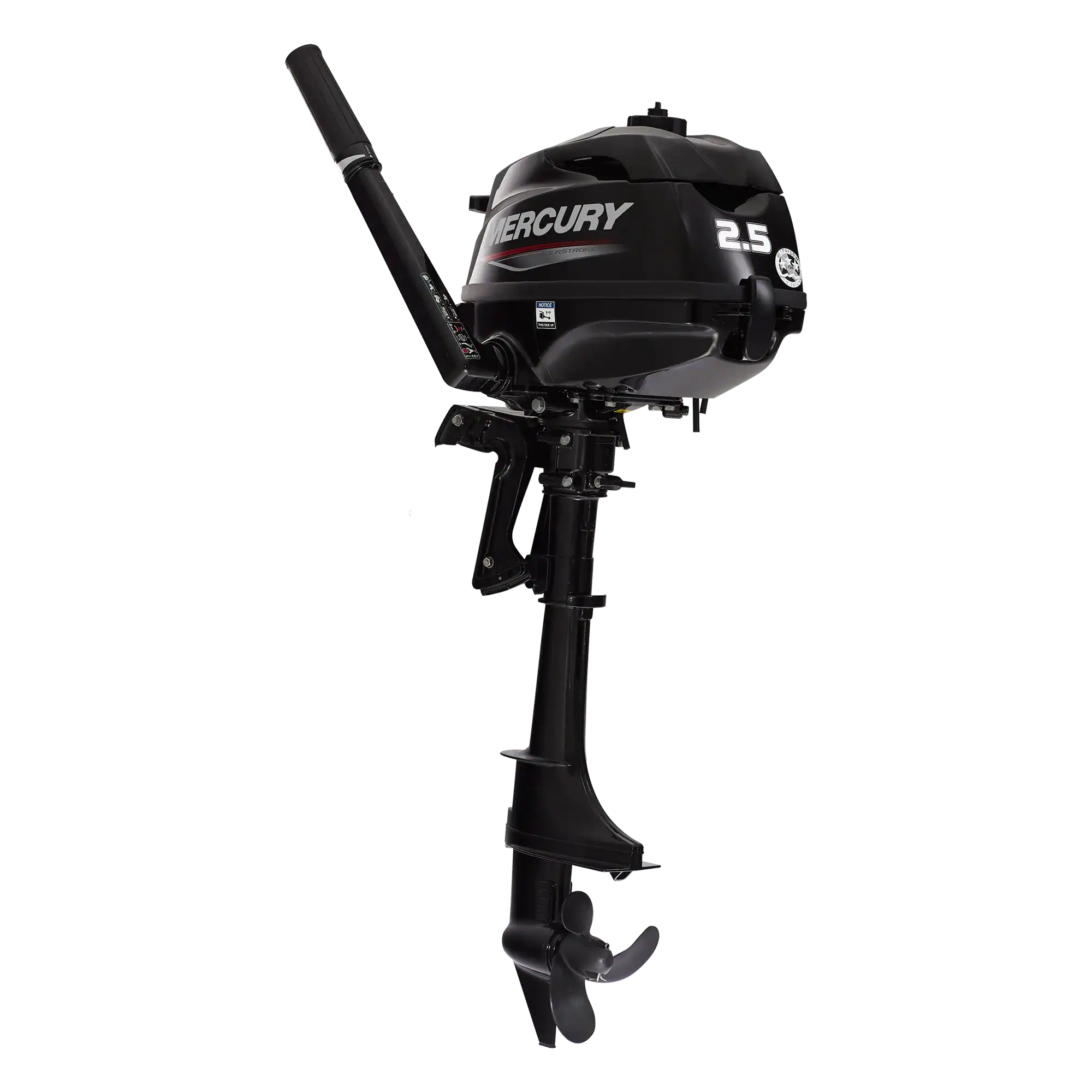
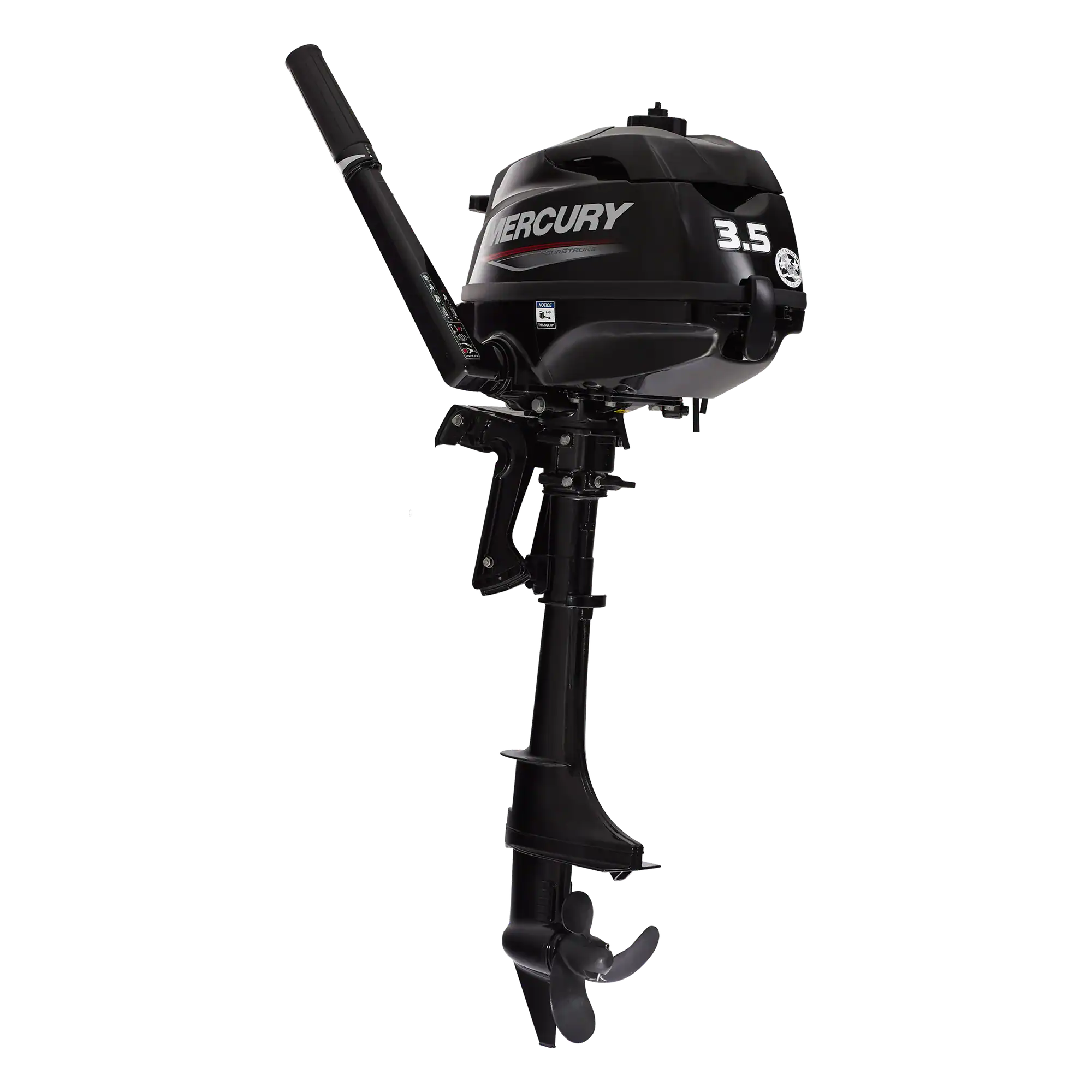
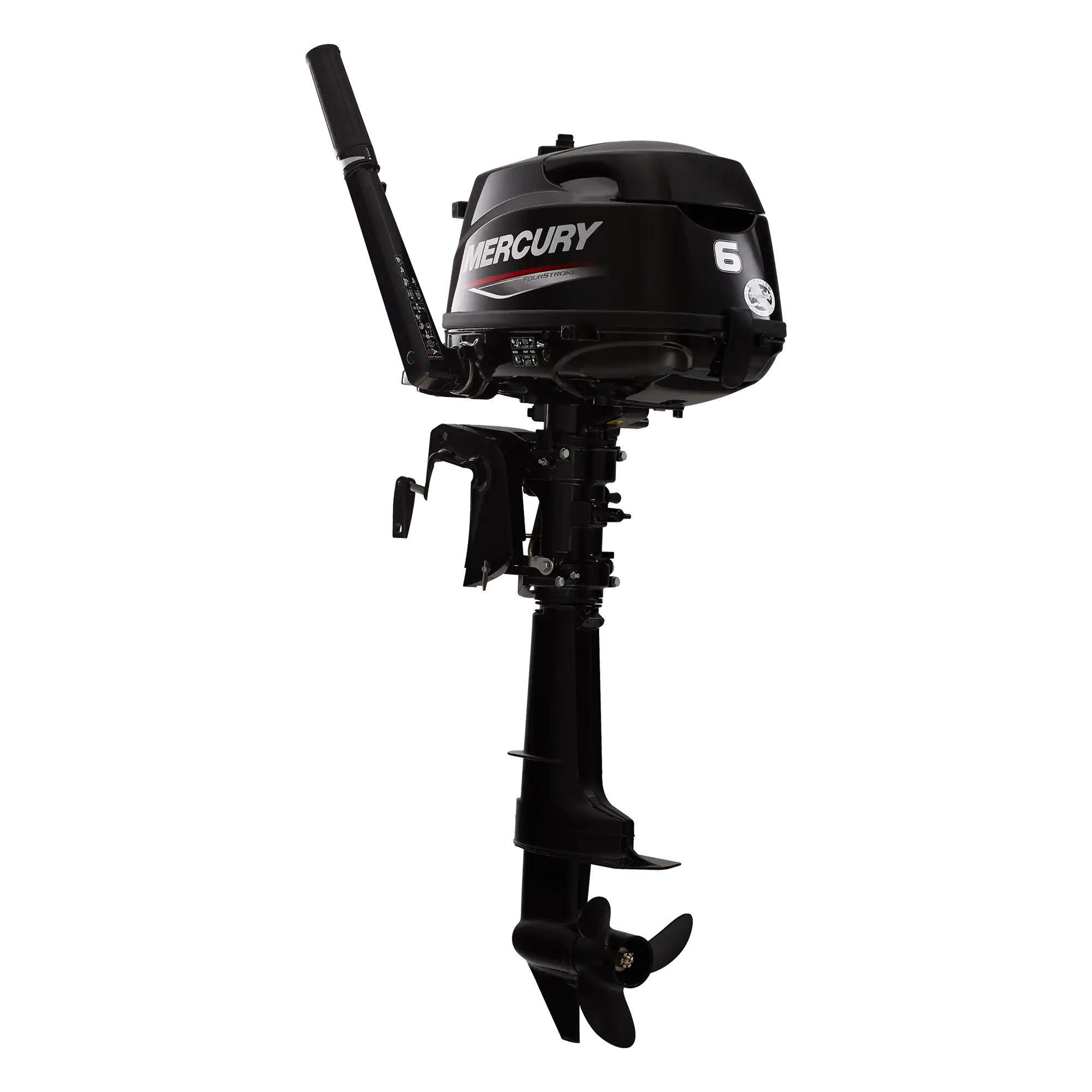
Ready to choose your engine? Shop Mercury outboards online, or call us and we’ll help you choose.
Phone help Monday to Friday, 8:00 AM to 4:00 PM PT.
