


TL;DR
Your boat’s capacity plate sets the limit, so never go over its maximum horsepower. Inside that limit, choose close to the maximum if you often carry a full load, run long distances or push against current. For a small tender or a kicker, a smaller engine is usually enough.
Know what you need? View all outboards, or call us. 1-807-206-0032
Table of contents
What decides the horsepower for your boat?
Your boat’s capacity plate decides the limit. It’s a label fixed to the boat where the driver can see it. It lists the maximum engine power the boat is built for, and your outboard should stay within it.
What if your boat has no capacity plate?
Ask the boat’s builder for its maximum horsepower before you choose an engine. Some inflatables and canoes list it in their manual instead. Still not sure? Call us before you order.
Why the plate is the limit
The plate is the builder’s rating for the hull. Mercury’s first rule for fitting a portable is to stay within it, even if the boat’s last engine was bigger.
How much horsepower do you need inside that limit?
Choose by how you use the boat. The closer your trips come to the boat’s limits, the closer to the maximum horsepower you’ll want.
What pushes you toward more power
- A heavy load: More people, more gear and more fuel.
- Long runs, where a little more speed saves a lot of time.
- Current, tide and wind, which a small engine has to push against.
- A heavier hull, such as a wide aluminum boat, against a light inflatable.
What lets you choose less
- A light boat, such as an inflatable, a canoe or a tender. A tender is a small boat that takes you to a bigger one.
- Short trips, such as from the dock to a moored boat.
- Trolling, tide and wind, where you run slowly for hours, often with a kicker: A second, smaller engine beside the main one.
- Carrying the engine, since every step up in horsepower adds weight.
Which Mercury portable horsepower suits which job?
Each step up in horsepower brings more speed and more load, and more weight to carry. Here’s where we’d start for each size, and what changes as you go up.
| Horsepower | Where we’d start | What you get |
|---|---|---|
| 2.5hp and 3.5hp | Inflatables, canoes and small tenders | The lightest engines, with a built-in fuel tank and pull start |
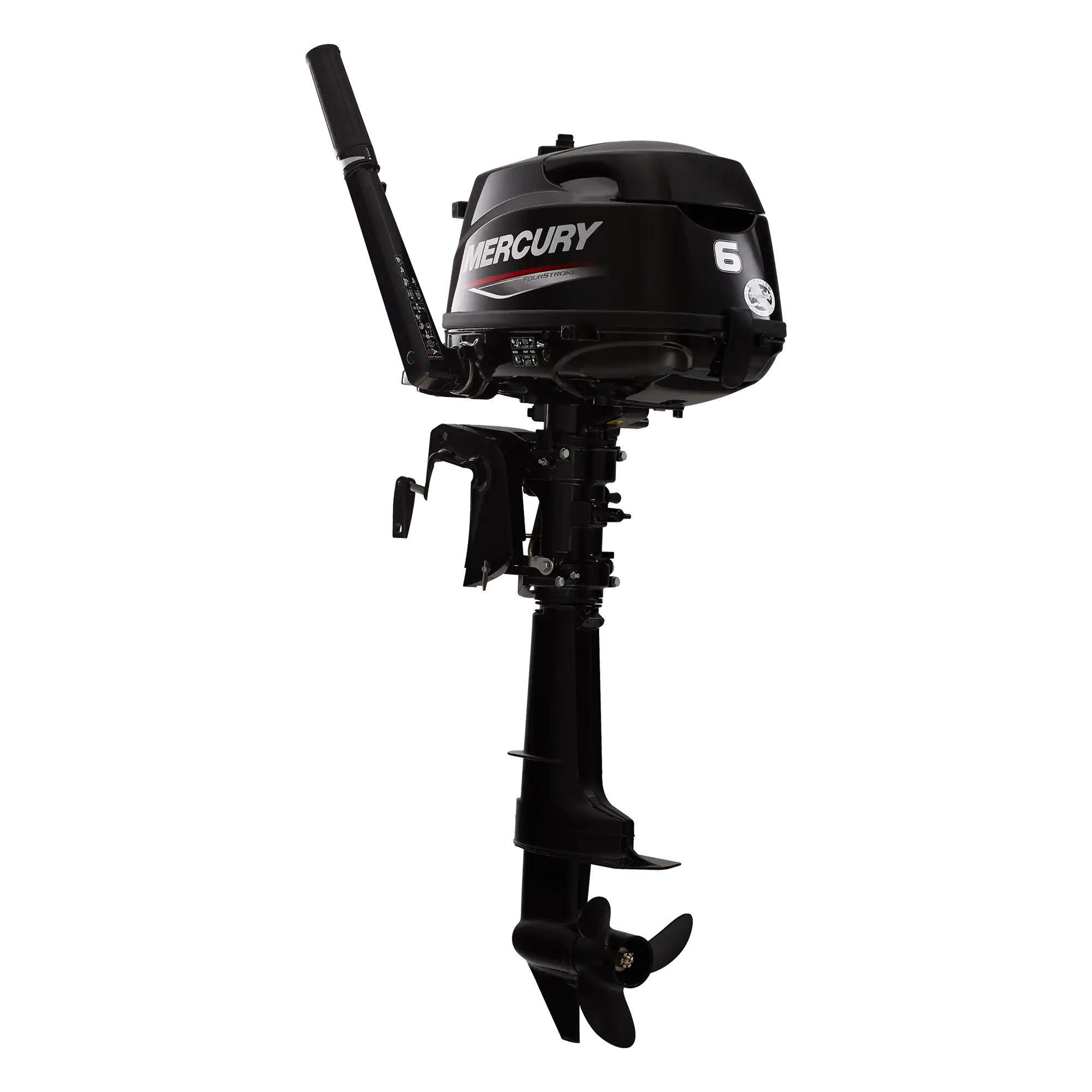
| 4hp, 5hp and 6hp | Larger inflatables, dinghies and small sailboats | A built-in tank, with forward, neutral and reverse |
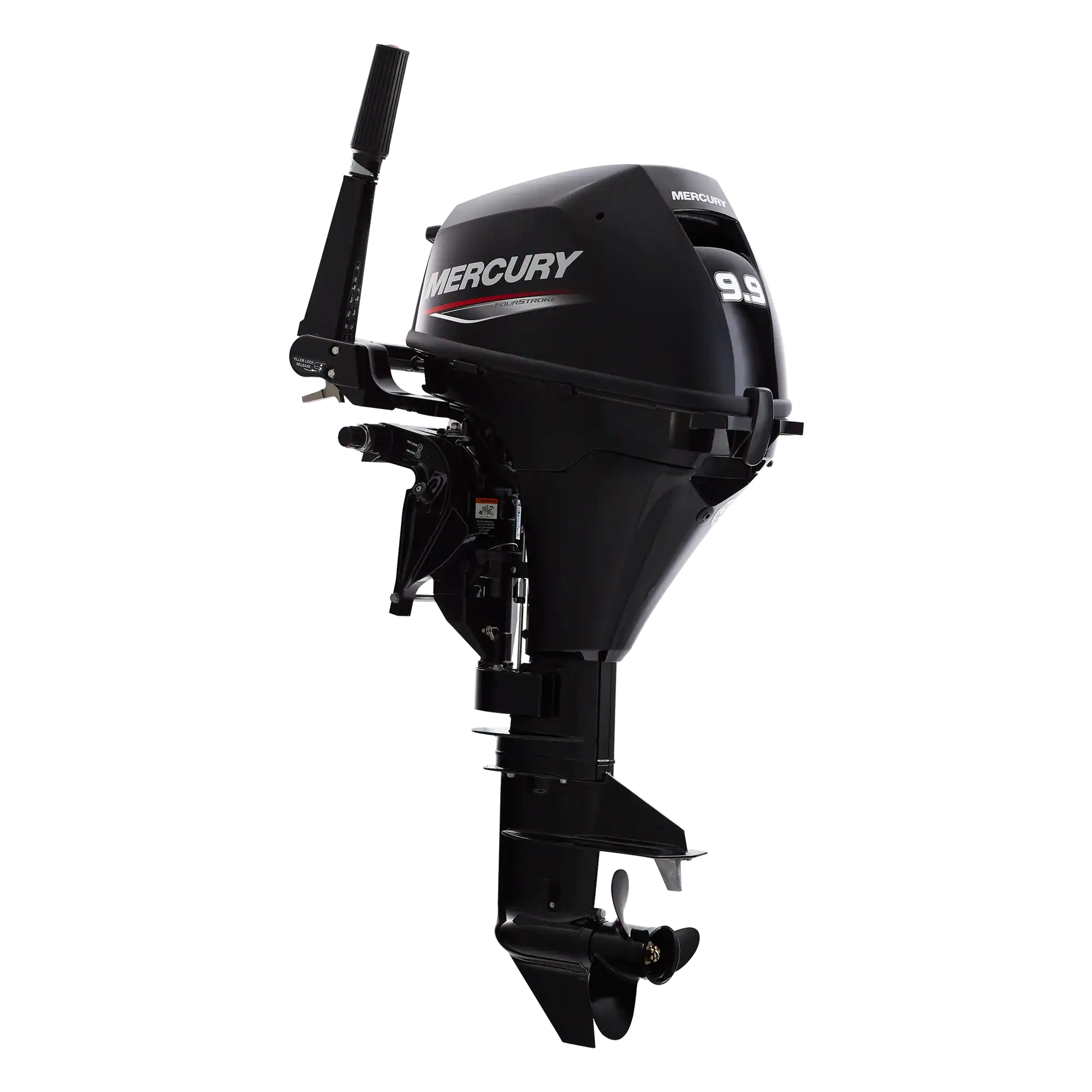
| 8hp and 9.9hp | Small aluminum boats, flat-bottomed jon boats and kickers | Fuel injection, a separate tank, and pull or electric start |
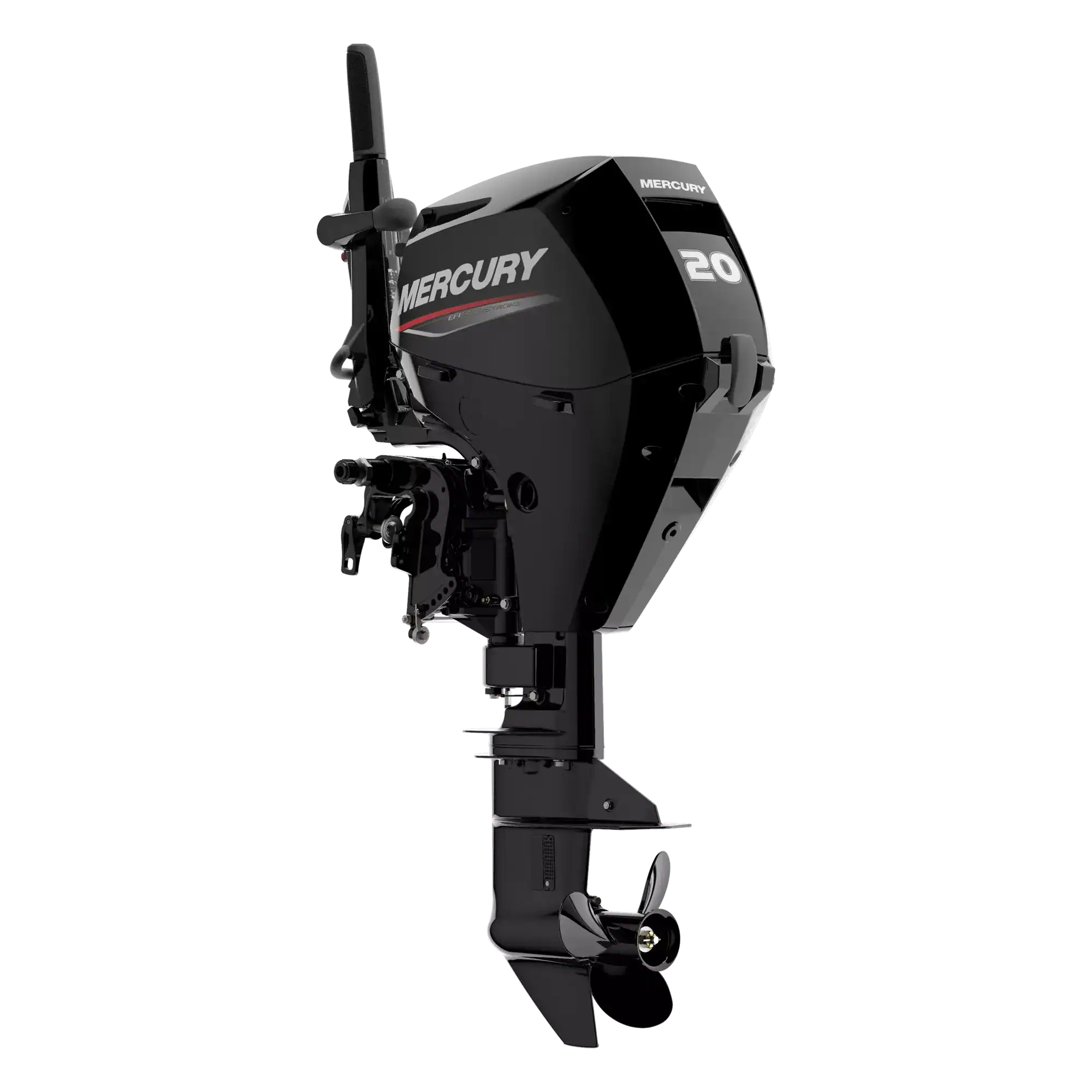
| 15hp and 20hp | Larger small boats and heavier loads | More speed and load, with tiller or remote steering |
| 25hp | The biggest boats that take a portable | The most power we sell, with tiller or remote steering |
Read the table as a starting point
The table is where we’d begin, not a rule. Your capacity plate, your load and your water decide the answer. A canoe on a calm lake and the same canoe on a tidal river need different engines.
Weight goes up with horsepower
A 2.5hp weighs about 41 lbs (19 kg), while a 25hp weighs 131 lbs (59 kg) or more. Our outboard weight guide lists every size.
Which special engines suit special jobs?
Mercury builds several versions of its portables for particular jobs. If one of these describes your boat, start there.
- Sail Power (5hp): A 20 in (50.8 cm) shaft for a sailboat bracket, and an alternator to charge a battery.
- Command Thrust (9.9hp): A larger gearcase and propeller, for pushing heavier boats. The gearcase is the housing under the water that holds the gears.
- ProKicker (9.9hp, 15hp and 25hp): Built for trolling and as a backup engine beside a bigger one.
- Jet (25hp): A jet drive in place of a propeller, for shallow water.
Should you choose gas or electric?
If your boat suits a 3.5hp, the Avator 7.5e electric outboard is worth a look. Mercury says it gives speed and acceleration similar to a 3.5hp. Our guide to electric vs gas outboards compares the two.
Choose close to the limit if you carry a load
Start with the capacity plate, and stay at or under its maximum. If you often run with a full load, a long way or against current, choose close to the maximum. If the boat is light and the trips are short, a smaller engine saves weight and is easier to carry. Check your boat’s capacity plate before you order. Call us if you’re unsure, and we’ll help you choose. Try the Outboard Finder, view all outboards, or call 1-807-206-0032.
Which Mercury outboards match the horsepower you need?
Questions about outboard horsepower
Can I put a bigger engine on my boat than the plate says?
No. Stay at or under the maximum horsepower on your boat’s capacity plate. Mercury’s first rule for fitting a portable is not to go over it.
Is it better to choose a little more horsepower than I need?
Inside your boat’s limit, a little extra power helps when you carry a full load. It also adds weight, so balance it against carrying the engine.
What size outboard do I need for a 12 ft (3.7 m) aluminum boat?
Check the boat’s capacity plate first, since boats of the same length can carry different limits. Then use the table above, and call us with the plate’s figure if you’d like a second opinion.
Found your horsepower? The Outboard Finder shows the engines that fit your boat.
Phone help Monday to Friday, 8:00 AM to 4:00 PM PT.
