
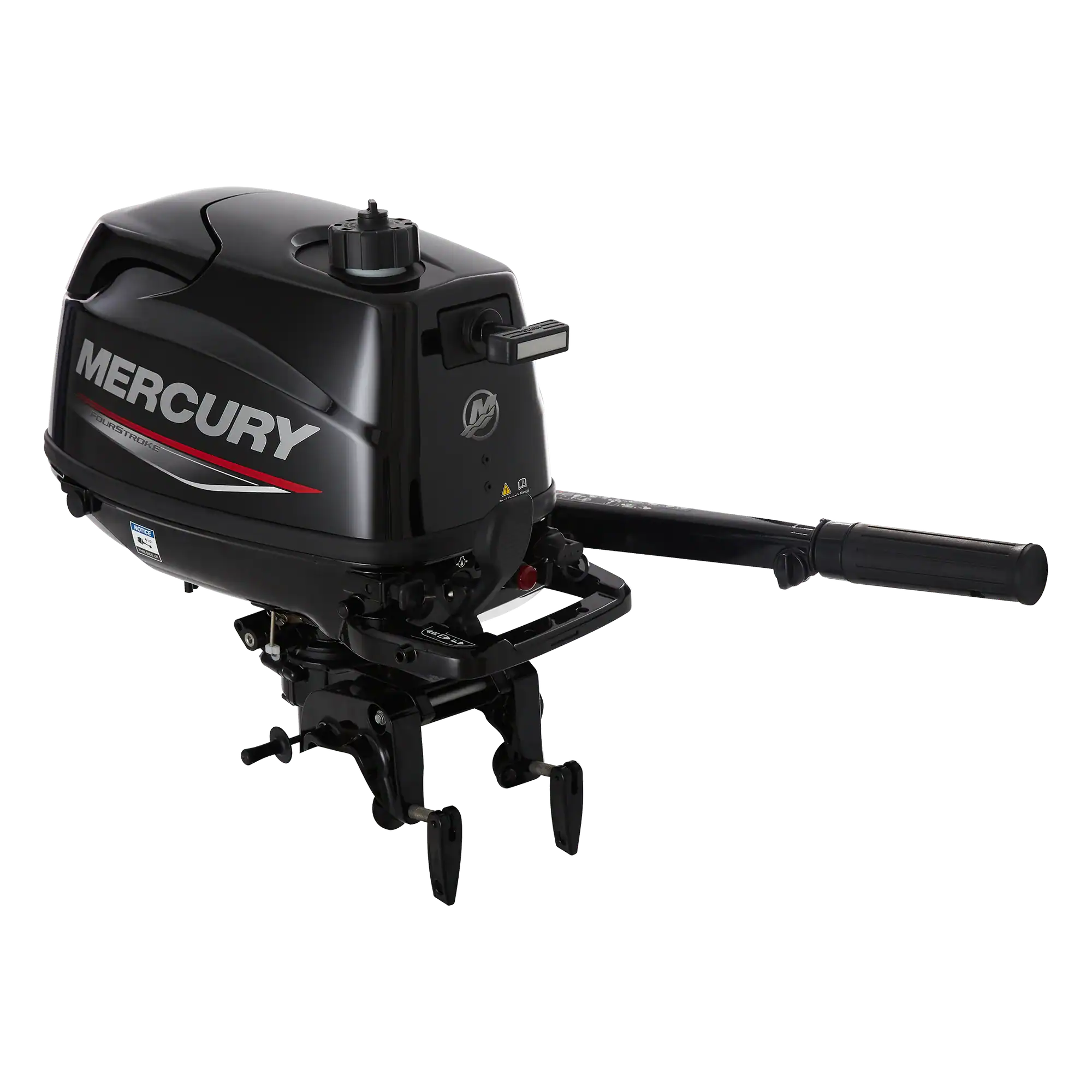
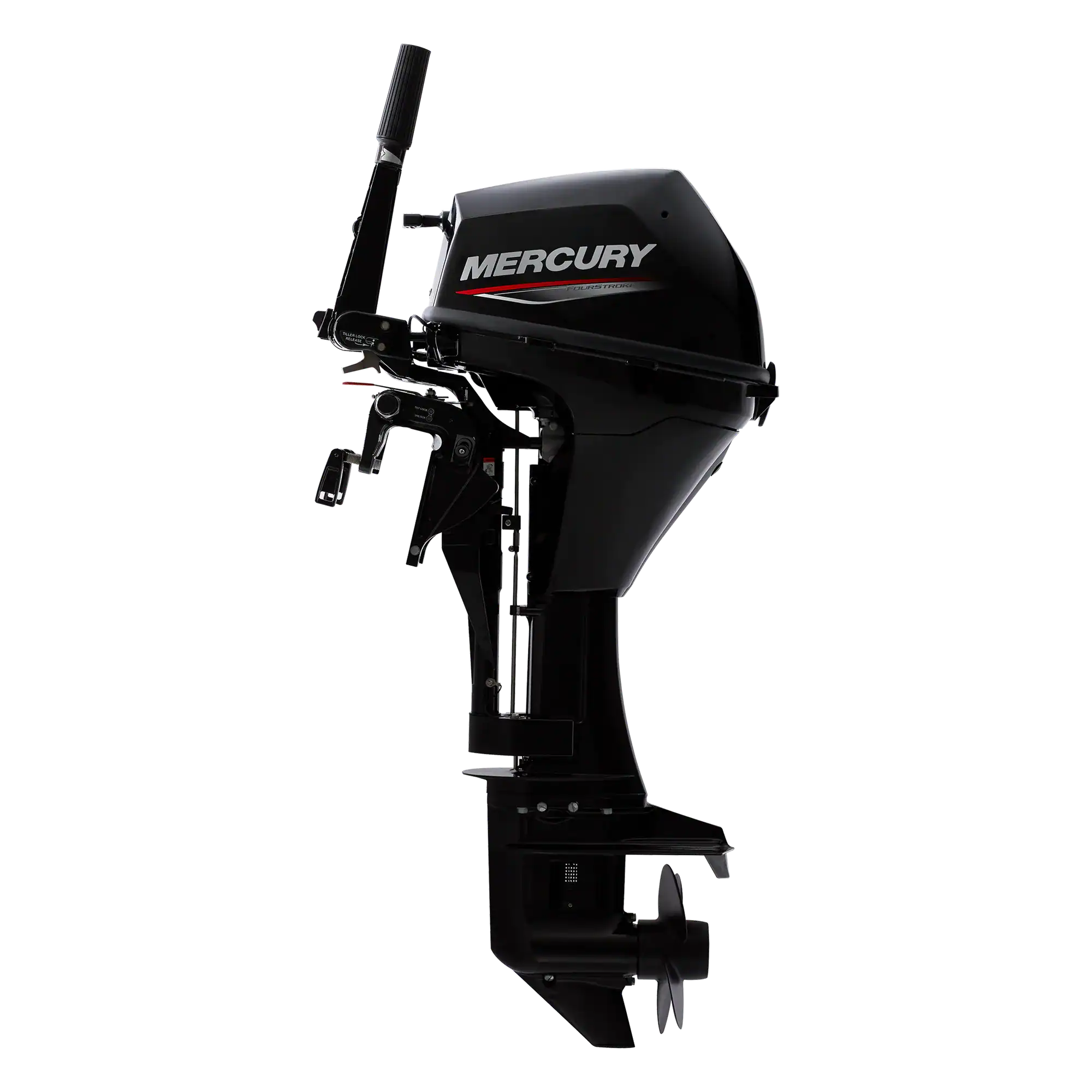
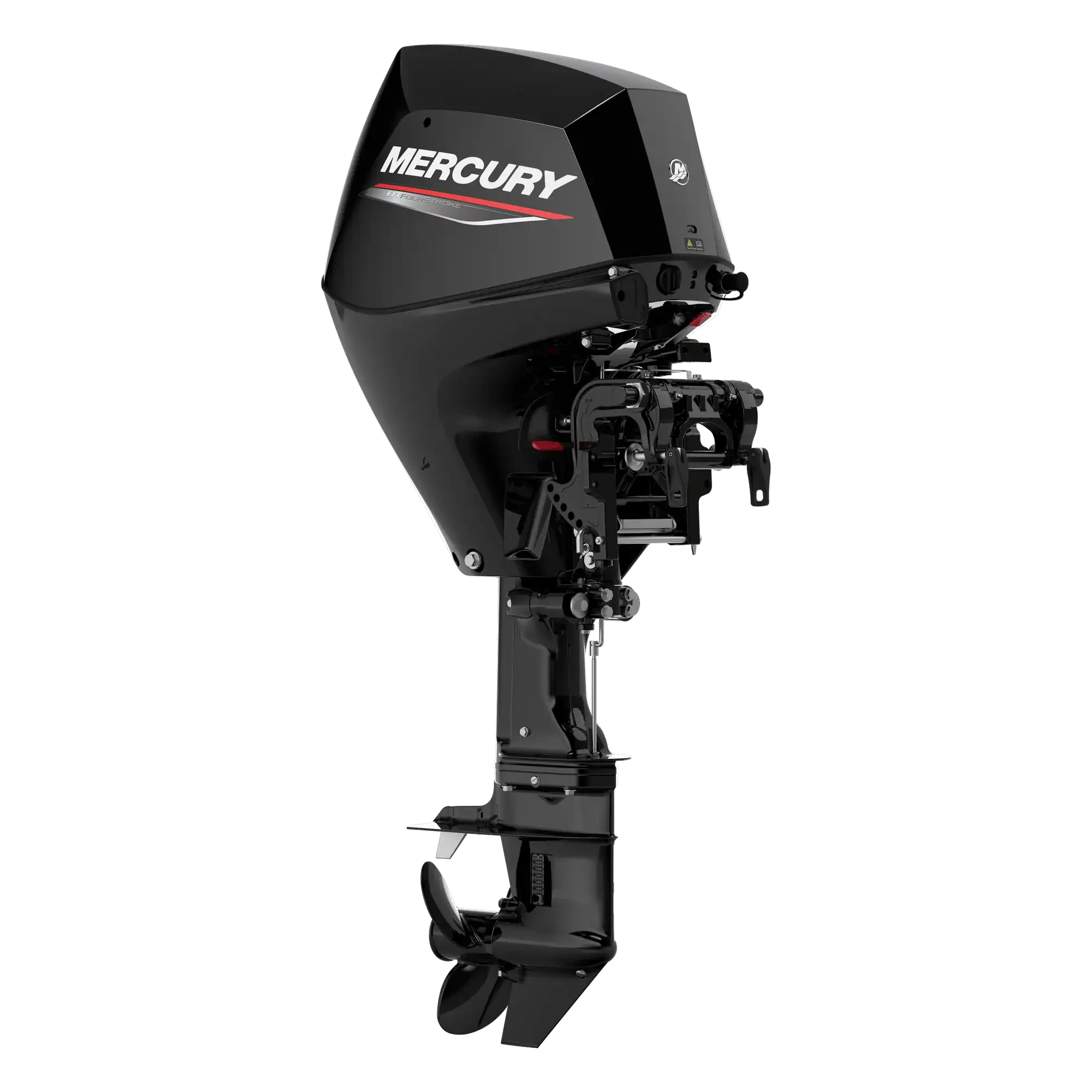
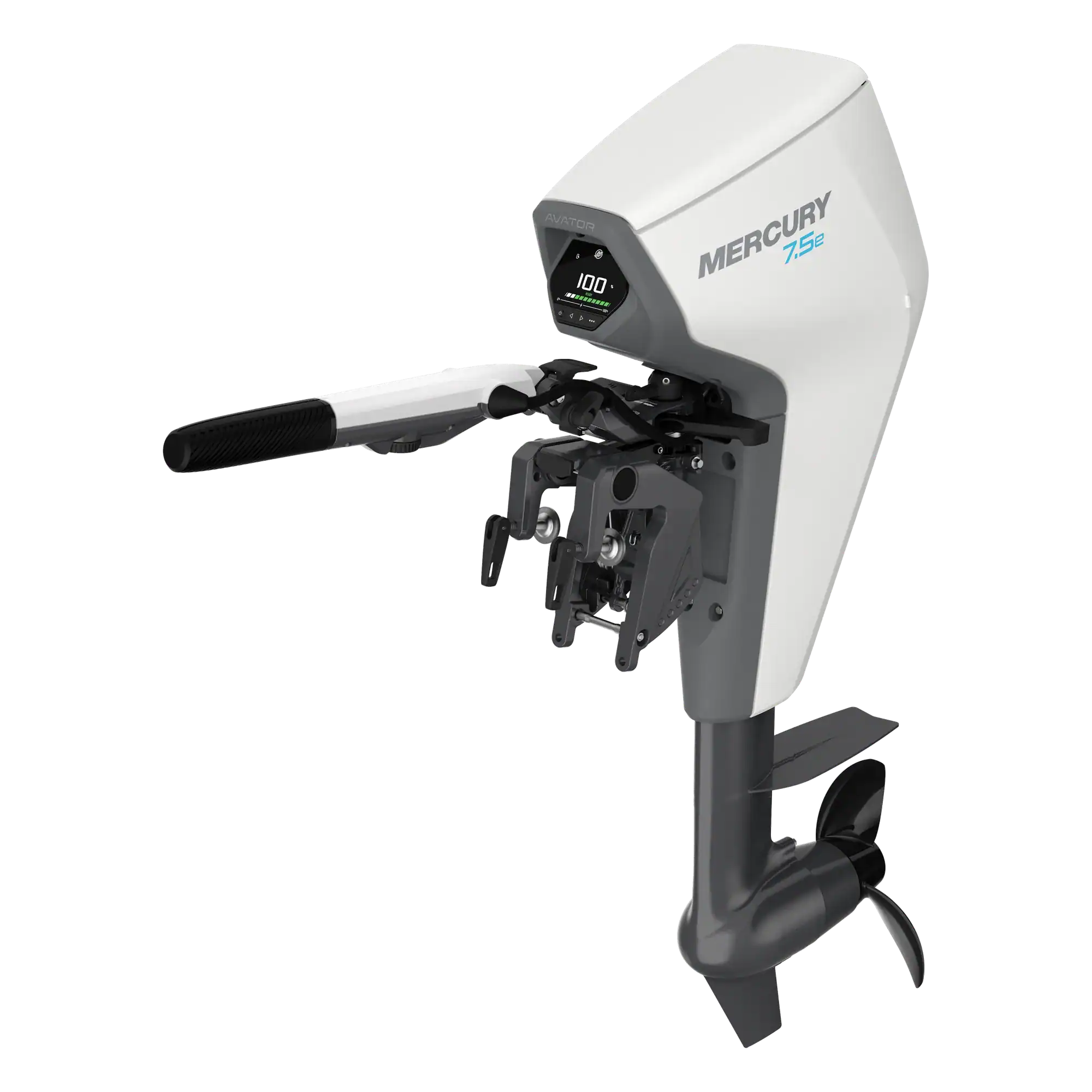
Home / Outboard guides
Outboard guides
Plain answers for choosing, fitting and running a Mercury portable outboard. Start with horsepower and your transom, then compare weights, and gas against electric.

Start here: The outboard buying guide
Everything to check before you buy a portable outboard, in the order to decide it: Horsepower, shaft length, start type and steering.
All guides

How to read a Mercury model code
Mercury model codes explained: what E, M, H, L, XL, PT and A mean, with examples, so you can match an outboard to your boat and transom.

Mercury repower guide
What to check before you swap your old outboard for a Mercury.

Electric vs gas outboard
How the Avator 7.5e compares with a gas outboard for range, noise and upkeep.

How much outboards weigh
Engine weights by horsepower, and what they mean for carrying and balance.

How to measure your transom
Measure your transom and pick the shaft length that fits.

How to choose horsepower
Match horsepower to your boat’s capacity plate, your load and how you use it.
Latest from the outboards blog
Choosing and fitting
Tiller outboard or remote steering: Which suits your boat?
A tiller outboard is steered and controlled from a handle on the engine, so you sit at the back of the boat.
Delivery and setup
How to mount an outboard on a bracket or transom
Centre the outboard on the transom or bracket, set the anti-ventilation plate at Mercury’s depth, and tighten the clamp screws in turns.
Portable outboards
How to store and carry a portable outboard motor
Store and carry a portable Mercury outboard upright, ideally clamped to an outboard motor stand.

Not sure which outboard?
Tell us about your boat and we’ll help you pick the right engine.


