


TL;DR
Store and carry a portable Mercury outboard upright, ideally clamped to an outboard motor stand. If it has to lie down, use only the side Mercury approves, since the wrong side can let oil into the cylinders. Run the fuel out before you move it, and store it tilted fully down.
Choosing your engine? Shop outboards or Call 1-807-206-0032

Table of contents
Add a header to begin generating the table of contents
Why does the position matter when you store an outboard?
Position matters because a four-stroke outboard keeps its oil in the crankcase. Lay the engine on the wrong side and that oil can run where it shouldn’t. Mercury warns this can damage the engine.
What happens if you lay an outboard on the wrong side?
On the wrong side, oil can drain from the crankcase into the cylinders. Mercury’s manuals say this kind of oil loss can damage the engine.
How do you find the right side on your engine?
Check your owner’s manual, which shows the approved positions for your engine. The 2.5hp and 3.5hp also carry a “This side up” decal. Check before the engine leaves the transom for the first time.
Snap a photo of the storage page in your owner’s manual. When you’re loading the car in a hurry, you’ll have the answer on your phone.
Which positions does Mercury approve for portable outboards?
Upright is approved on every gas portable Mercury outboard. The side positions change from model to model, so never assume one engine follows another. Here is what Mercury’s owner’s manuals list.
| Engine | Positions Mercury approves |
|---|---|
| 2.5hp and 3.5hp | Upright, or tiller handle up |
| 4hp, 5hp and 6hp | Upright, or tiller handle down |
| 8hp and 9.9hp | Upright, tiller handle down, or front side down |
| 15hp, 20hp and 25hp | Upright, port side down, or front side up |
| Avator 7.5e | Either side down, or front side up with the tiller folded |
Notice that the 2.5hp and the 4hp want opposite sides. The 9.9hp lies front side down, while the 15hp lies front side up.
That’s why the manual beats memory every time. Port side means the left side of the engine as you face forward in the boat.
Upright on an outboard motor stand
An outboard motor stand holds the engine upright by its transom clamp, just like a boat would. It keeps oil where it belongs, keeps the propeller off the floor and makes the engine easy to clamp and unclamp. If you only buy one storage item, make it a stand rated for your engine’s weight.
On its side, on the approved side only
Laying the engine down is fine when it’s the side Mercury approves. Pad it with old blankets, and make sure nothing heavy rests on the cowl, the engine’s top cover. Lay it down only after the fuel is run out.
How do you get a portable outboard ready to move?
Run the fuel out and drain the cooling water before you move the engine. Mercury’s steps take a few minutes and stop fuel and water ending up where they shouldn’t.
Do them while the engine is still in the water. On the Avator 7.5e there’s no fuel to run out, and Mercury says to carry its battery upright or on its side.
Running the fuel out
The steps depend on where the fuel comes from:
- Built-in tank: With the engine running, close the fuel valve and let it run until it stops. Then close the tank vent.
- Separate fuel tank: With the engine running, disconnect the fuel line and let it run until it stops. Then fit the protector cap on the fuel connector.
Draining the cooling water
Keep the gearcase in the water while the engine runs, so it can draw cooling water. Once it stops, hold the engine upright until all the water drains out. Then it’s ready to carry.
How should you carry a portable outboard?
Carry it upright or on its approved side, and get help with the heavier engines. Mercury lists its 2.5hp and 3.5hp at about 41 to 43 lb (19 to 20 kg). Its 15hp and 20hp tillers start at about 105 lb (48 kg). From 8hp up, plan on two people or a cart.
Carrying the engine to the boat
Use the carrying handle, and keep the engine in an approved position the whole way. Don’t let it swing against the transom as you set it down. Once it’s on the transom, tighten the clamp screws before you let go.
Carrying the engine in a vehicle
Wrap the engine in old towels or blankets to protect it and your vehicle. Wedge it so it can’t slide or tip on the drive. Upright in a truck bed, strapped to a stand, works well for the larger portables.
Close the fuel tank vent before you load the engine, so fuel can’t seep out on the drive.
For trailering, Mercury’s manuals say to leave the engine tilted down and in forward gear. The tilt lock isn’t meant to hold the engine tilted up on the road.
How do you store a portable outboard over the winter?
Store it upright and tilted fully down, with the fuel sorted for the months ahead. Mercury’s storage steps keep water out of the cooling passages and gearcase, where it can freeze. A dry, sheltered spot finishes the job.
Storing the engine tilted fully down
Mercury says to store the outboard in the full down position. A tilted engine can trap water in the cooling passages or the gearcase. In a Canadian winter, that water can freeze and damage the engine.
Fuel for storage
Mercury’s 2.5hp and 3.5hp manual says to fill the tank with stabilized fuel for storage. If your gas contains alcohol, drain as much as you can first, because alcohol can form acid as it sits. Mercury’s manuals warn against leaving alcohol-blended fuel in the tank for long periods.
Store a portable outboard upright on a stand
An outboard motor stand keeps storage simple, with few ways to get it wrong. When the engine has to lie down, use the side your owner’s manual shows, never the side that looks most stable. Run the fuel out, drain the water and store it tilted fully down.
For a first engine, it’s worth reading our guide on how much outboards weigh before you plan who carries it.
And if you’re still choosing, view all outboards or call us at 1-807-206-0032. We’re glad to help you find the right portable for your boat.
Which Mercury portable outboards are easiest to carry and store?
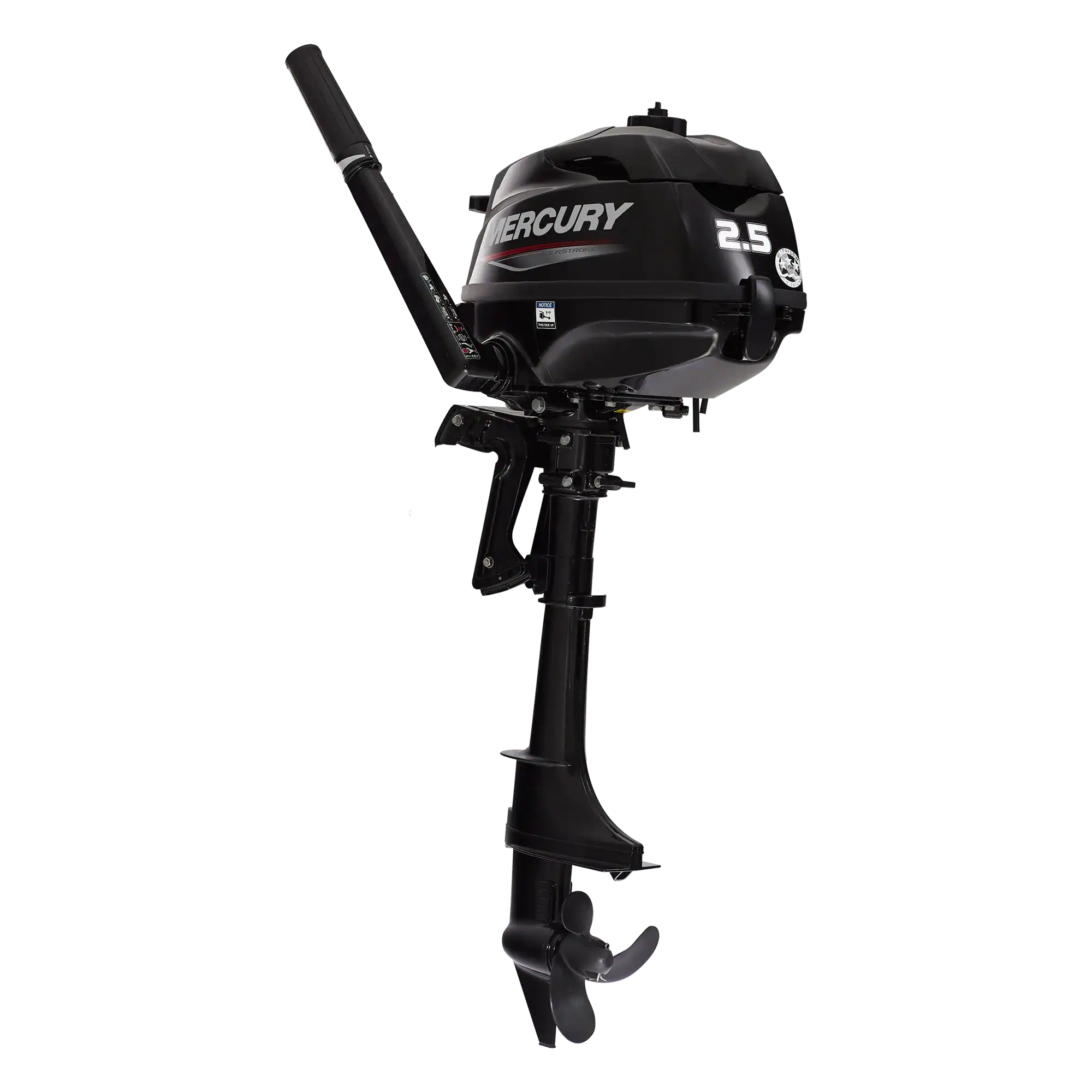
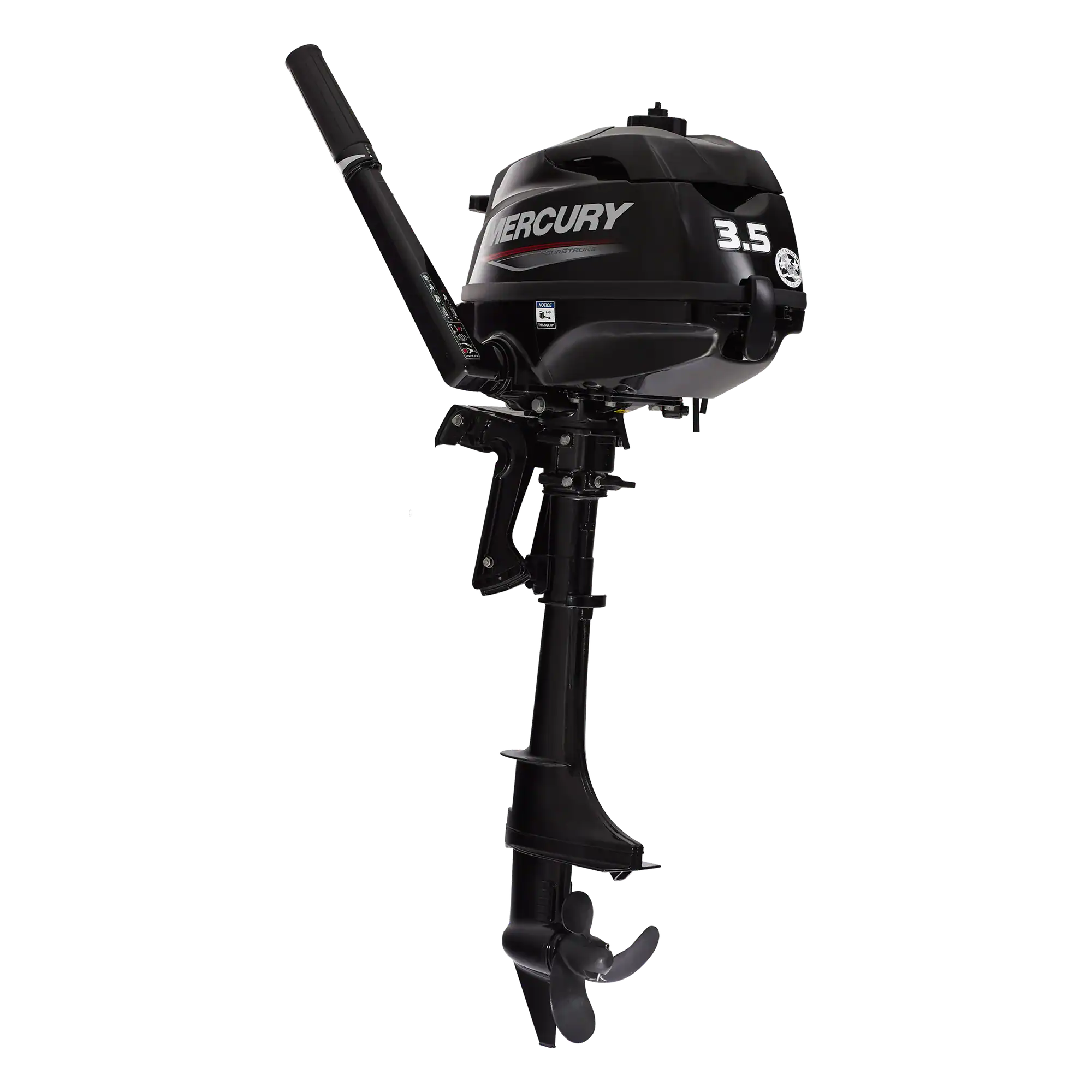
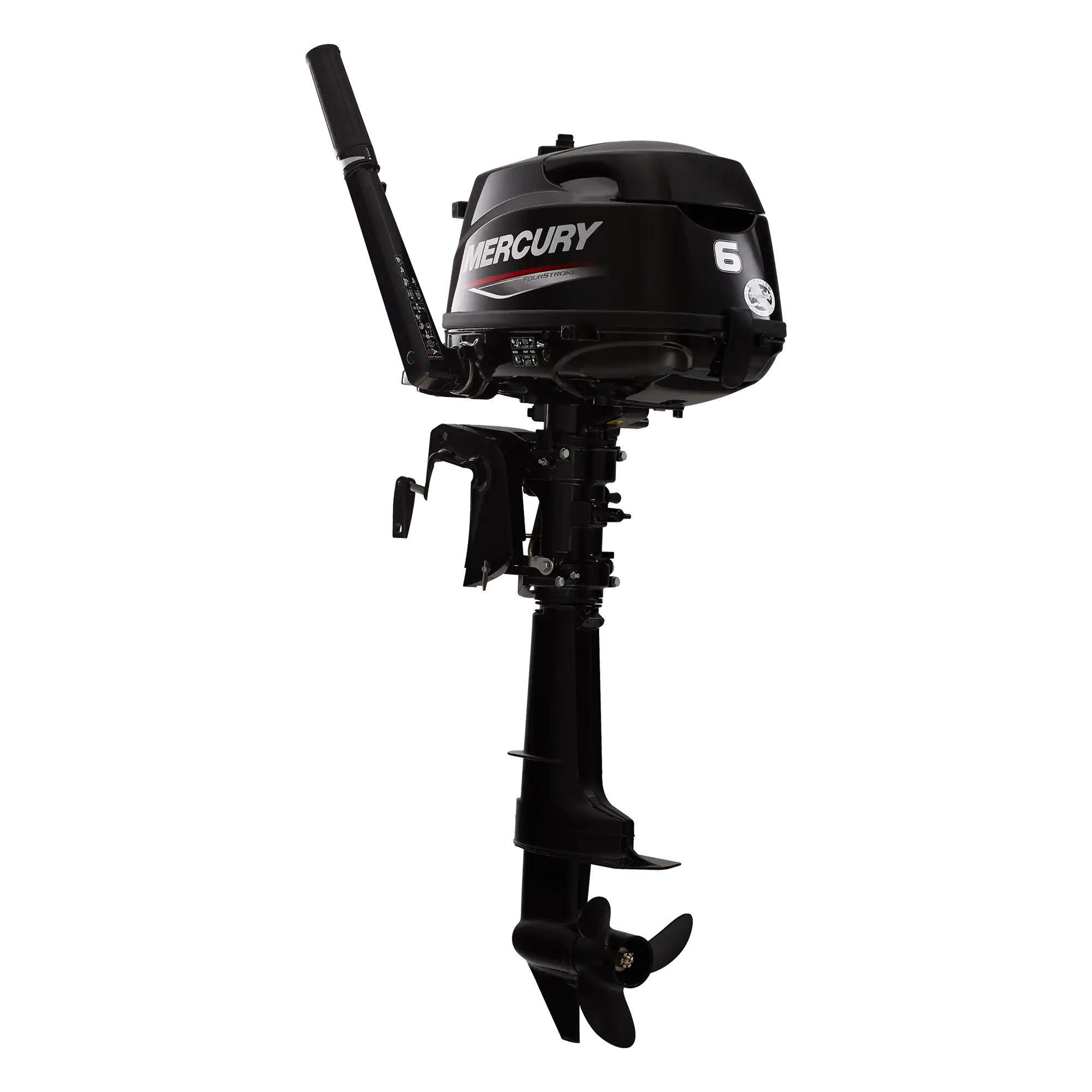
Ready to choose your engine? Shop Mercury outboards online, or call us and we’ll help you choose.
Phone help Monday to Friday, 8:00 AM to 4:00 PM PT.
